
Post War
The fast boats are less well documented about. However, as seen by his letter to John Buchan thanking him for helping him to get back in to the RAF, Lawrence saw his work with fast boats as something of a success.
It all began when he was stationed at RAF Cattewater (later to become Mount Batten), where he had witnessed a flying boat accident and took part in the rescue in which airmen lost their lives, in part due to poor boat tender facilities. Lawrence was a witness at the crash inquiry.
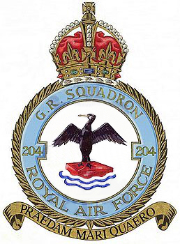
'On Water barry wavy Azure/Argent a Mooring Buoy Gules thereon a Cormorant displayed proper.'
The motto is ' I seek my prey at sea.'
The cormorant is based on a photograph taken by the then Aircraftsman Shaw.
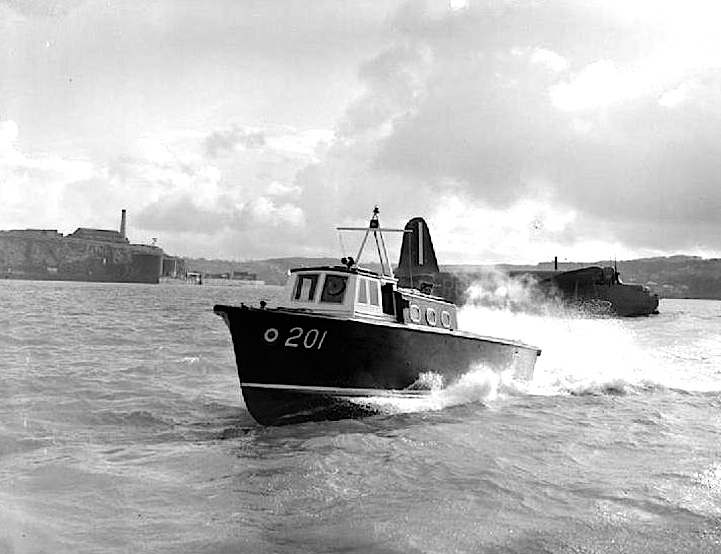
ST 201
9 June 1934
R.A.F. 200 left Southampton Water for Plymouth, her present station, on Saturday, June 6th, at ten minutes to eleven in the morning, carrying a special crew of five R.A.F. personnel, and nearly twice her normal capacity of petrol and stores. Wind S.W., freshening to 20 miles an hour. Tide contrary. Sea choppy.
Engines first set at 2300 to Hurst Castle at 11.40 a.m. There the sea became rougher, the wind and tide coming in together and raising a broken swell. Off the Needles the meeting of the cross-seas provided quite a rough twenty minutes, during which the boat was thrown about vigorously and took some heavy splashes of spray aboard. No rolling, and speed only temporarily reduced, as from Swanage onwards advantage was taken of the shelter of the Portland promontory to open her up to 2500, her best cruising speed, and run over the swell. From St. Aldhelm's Head onwards she was a perfectly dry boat, and this opportunity was taken to refuel her main tank from cans of petrol carried on deck, and from a temporary tank taken on board for the special run.
Portland Bill was reached at about two o'clock, and passed close inshore. The long seas at Lyme Bay gave further opportunity of keeping up her cruising speed economically, as the boat ran lightly over them, steadily and dryly. The tide was now ebbing in her favour. Course was set slightly to the N. of Start Point, and the Devon Coast sighted at 4 o'clock, a long and heavy rain storm making visibility very limited. Off Start Point more heavy and broken seas were met, and speed was again reduced for a time, past Prawle to Bolt Head off Salcombe. The wind then dropped off to half its former strength and the boat was opened up to 2300 revolutions and held cleanly on her course to Plymouth at twenty past six p.m. No water remained in her bilges upon arrival, thanks to the self-bailers arranged in each of the boat's compartments. No solid water was shipped during the run, and the main cabin remained perfectly dry and comfortably throughout.
The engines ran faultlessly. A little oil was added to them on the way, to maintain their pressures constant at 40 lbs.; except for this they were not touched or thought of. The water outlet temperature gauges stood constantly at 45° Cent. The oil put in amounted to 1 gallon, as noted. Before the run to Plymouth was started, the boat did two and a half hours of test and trial running in Southampton Water. The trip round took seven and a half hours; so that her total running on the day came to 10 hours. During this she used 90 gallons of petrol, and 30 gallons remained in tanks upon arrival at Plymouth.
The whole run was made at cruising speed, no attempts to save time or take the shortest course being made. The boat was slowed down whenever the sea conditions made it comfortable to do so.
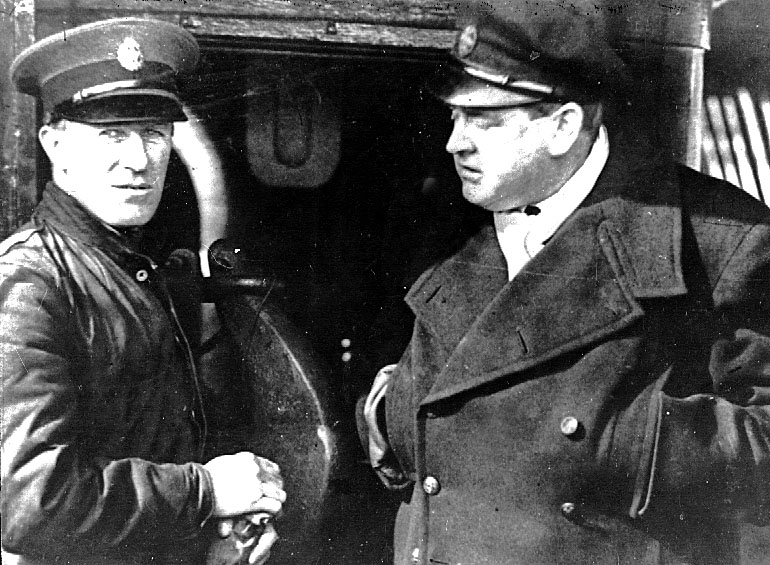
Lawrence with Hubert Scott-Paine.
As can be seen Lawrence's involvement from the beginning to where he got to before he retired was the production of the RAF's ST 200 seaplane tenders, which he was justly proud.
In January 1935 in a letter to John Buchan he writes:
Now I do not claim to have made these boats. They have grown out of joint experience, skill and imaginations of many men. But I can (secretly) feel that they owe to me their opportunity and their acceptance. The pundits met them with a fierce hostility: all the R.A.F. sailors, and all the Navy, said that they would break, sink, wear out, be unmanageable. To-day we are advising the War Office in refitting the coast defences entirely with boats of our model, and the Admiralty has specified them for the modernised battleships: while the Germans, Chinese, Spanish and Portuguese Governments have adopted them! In inventing them we have had to make new engines, new auxiliaries, use new timbers, new metals, new materials. It has been five years of intense and co-ordinated progress. Nothing now hinders the application of our design to big ships - except the conservatism of man, of course. Patience. It cannot be stopped now.
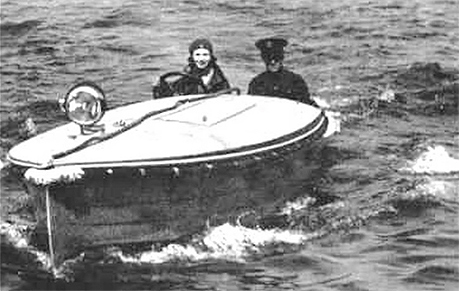
Lawrence with the Station Commander's wife, Clare Sydney Smith
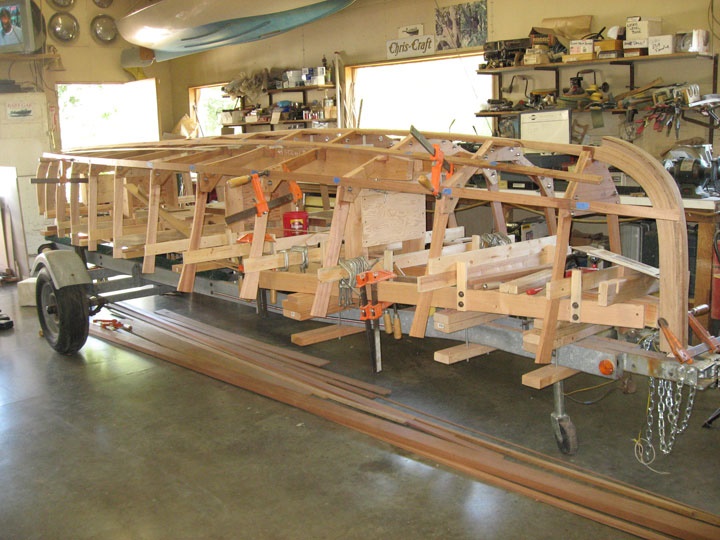
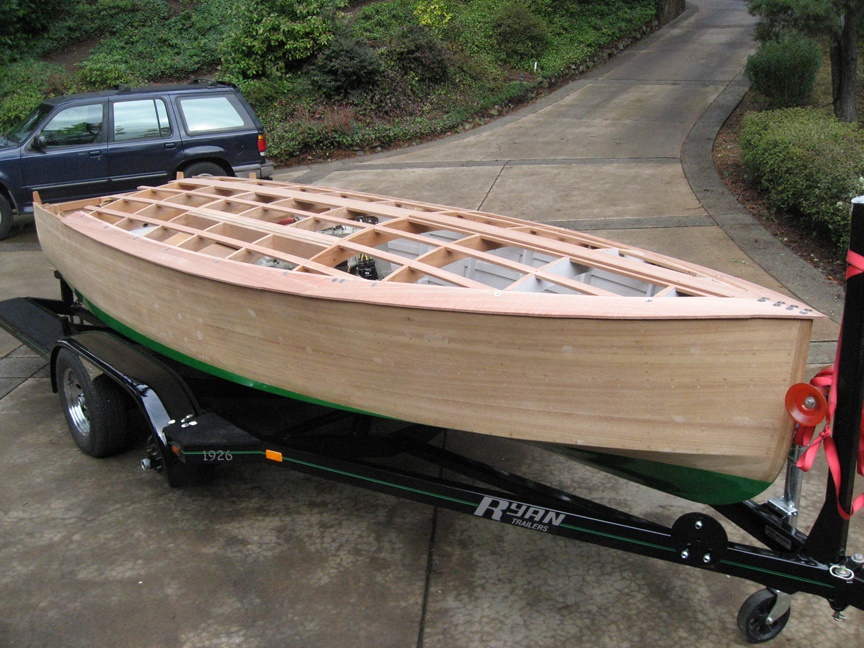
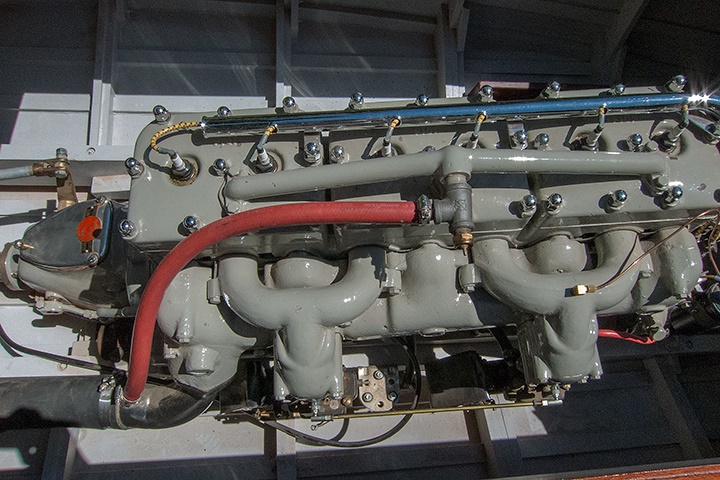
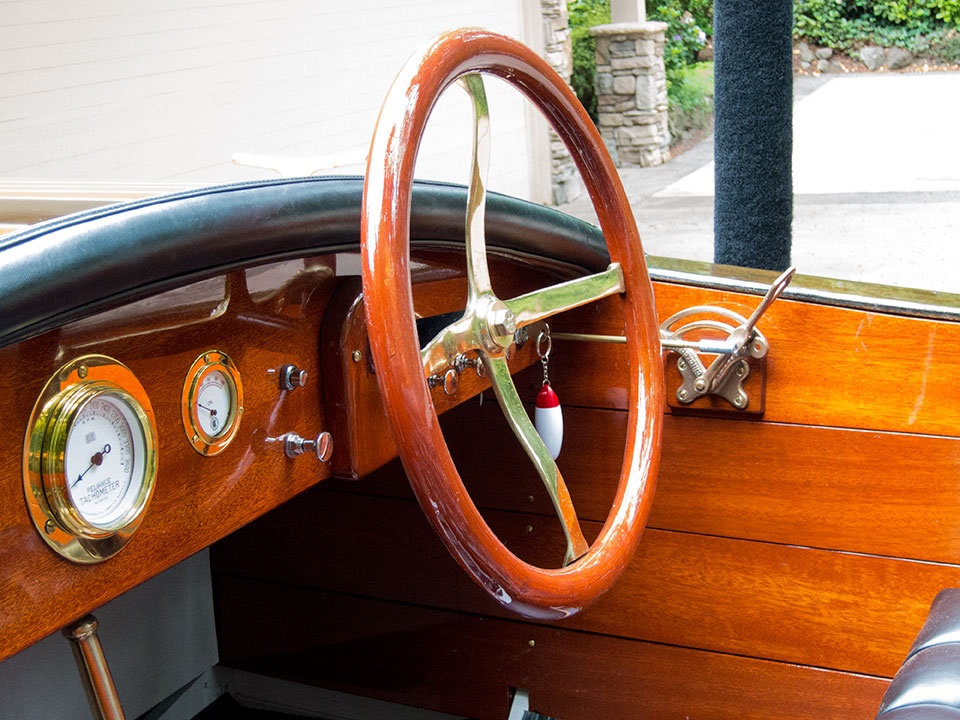
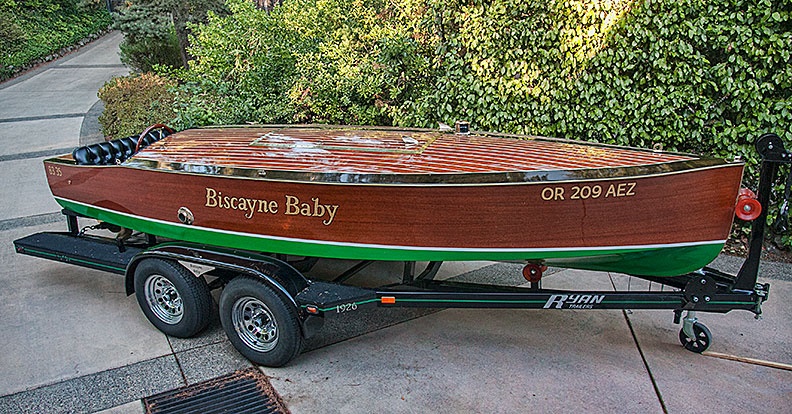
A long time client of the Purdy's was one Carl Fisher of Indianapolis (Indy) fame, who came up with the idea of building a 'Class' speedboat. 10 were built in the first year and raced, all piloted by Indy drivers. The craft were however lightly built and at the end of the season, stripped of their mechanics and the hulls burnt. Later more were built using heavier construction methods. They were powered by Scripps engines F-6, 18 feet long.
It is a beautiful craft without question.
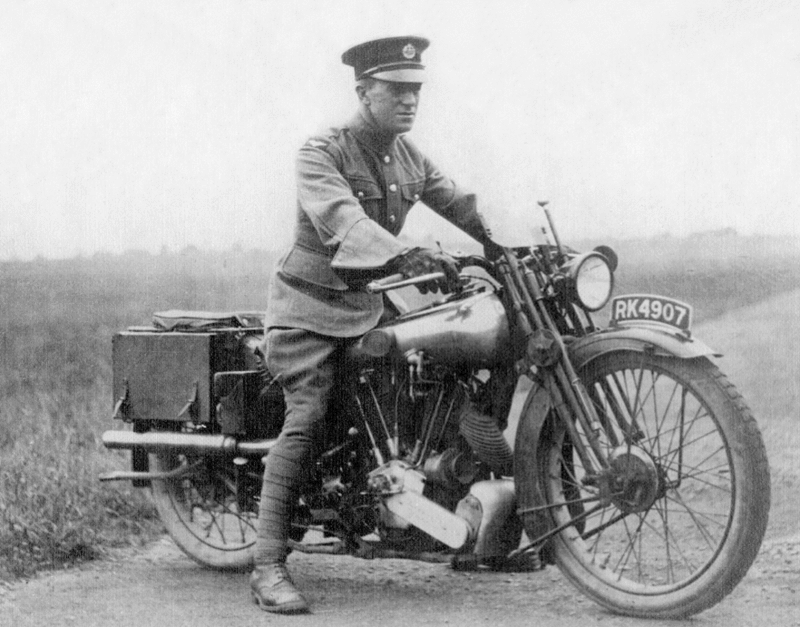
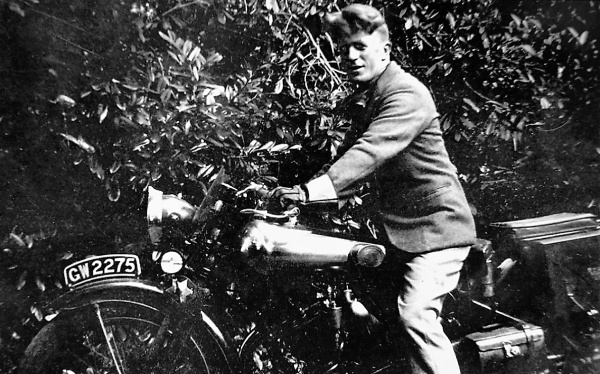
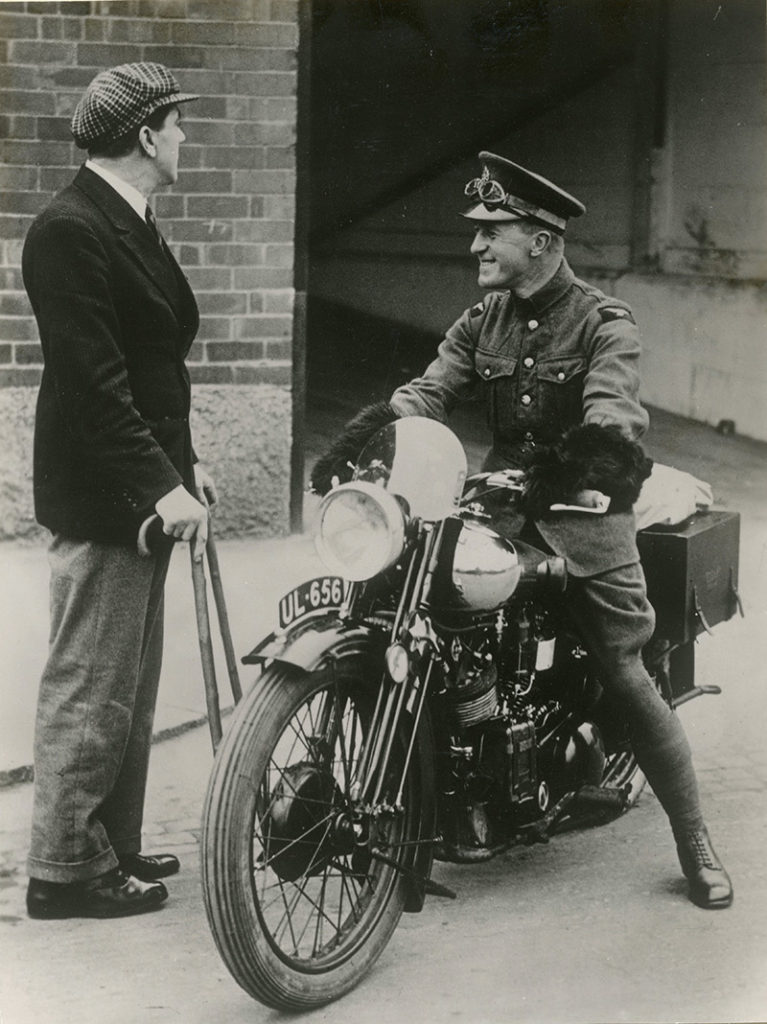
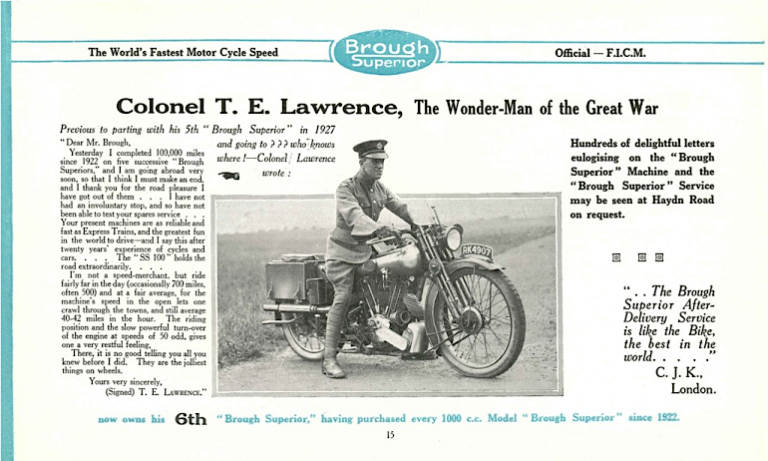
Lawrence on one of his Brough Superiors.
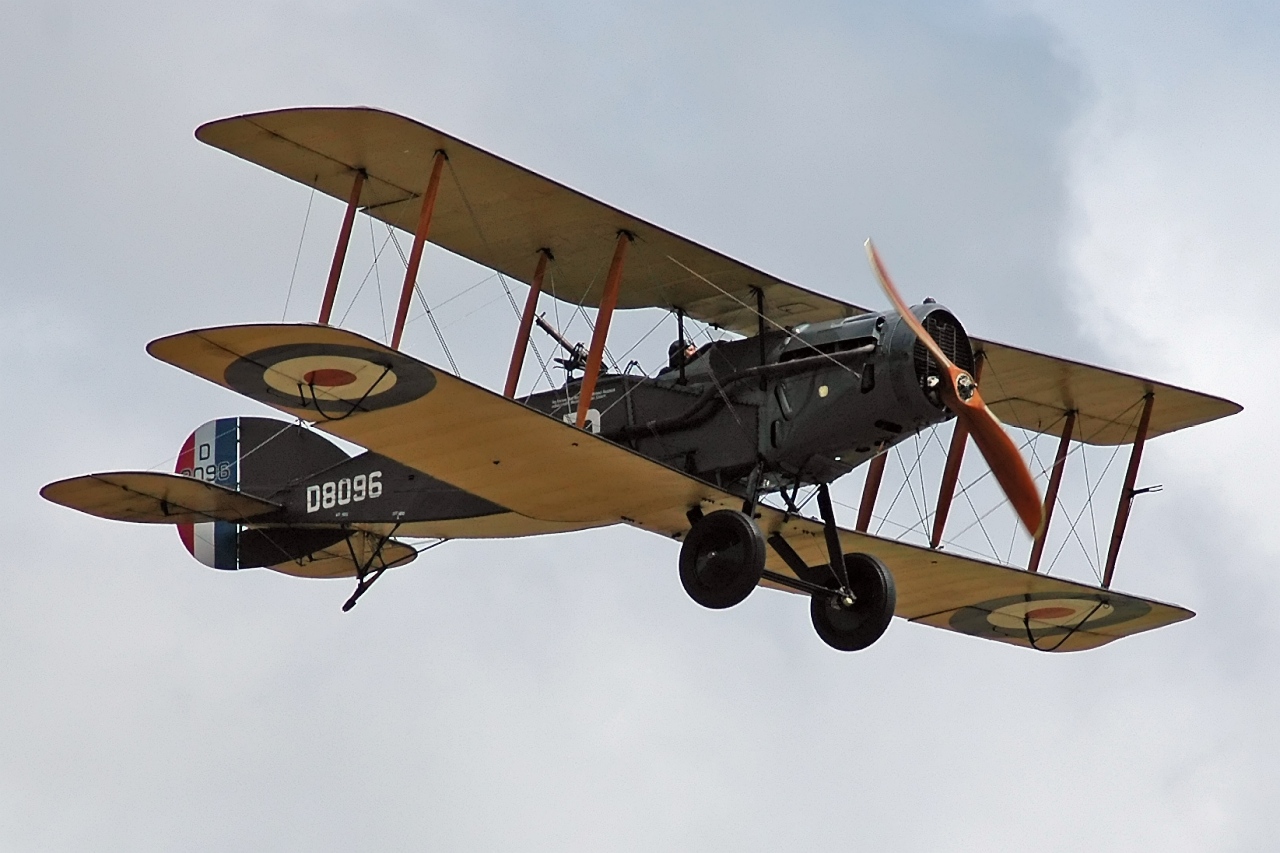
The journey taken that evening starts at RAF Cranwell, though the village, on to the A15 heading northward to Lincoln. While riding up the A15, a Bristol B2 Fighter from nearby RAF Digby (Whitewash Villas), joins him overhead and they have a race until the aircraft can no longer continue.
Lawrence eventually parks up in Lincoln Cathedral Close. He enters the Cathedral and listens to the organist practicing. He leaves via the White Hart Hotel courtyard where he refreshes himself under the yard pump.
The journey resumes with him heading to Newark, thence to Nottingham and returning to Cranwell via Sleaford. Along the way he purchases some of his favourite foods.
Bridlington
20.2.35
Dear Pat,
No more to here. I've finished, and shall push off by bike in a day or two for Clouds Hill, travelling by very slow stages, but arriving there in very scruff order some time in early March.
I shall be glad to get away, now.
Yours
T.E.S.
Mr. B. Smith,
3 Belvedere Crescent,
London, S.E.1
19.3.35
Dear Pat,
I've spent all today with Press Association bosses, and Press Photographing Agencies, making quite a lot of ground. There are good hopes, I fancy, of persuading all of them to leave me alone, and to refuse to buy the stolen products of the freelancers. I shall know for certain in about three days time; and if successful I shall try to get back to Clouds Hill early next week.
Will you send me current stuff (and any news or needs you have) to this old address, between now and Saturday?
I hope nothing disastrous has overtaken our place.
Yours ever
T.E.S.