Short Biography
……..and I can still see Lawrence three days later on the shore at Rabugh waving grateful hands as we left him there to return ourselves to Egypt. Long before we met again he had already begun to write his page, brilliant as a Persian miniature, in the History of England.
Sir Ronald Storrs KCMG CBE, Orientations.
Brief Background
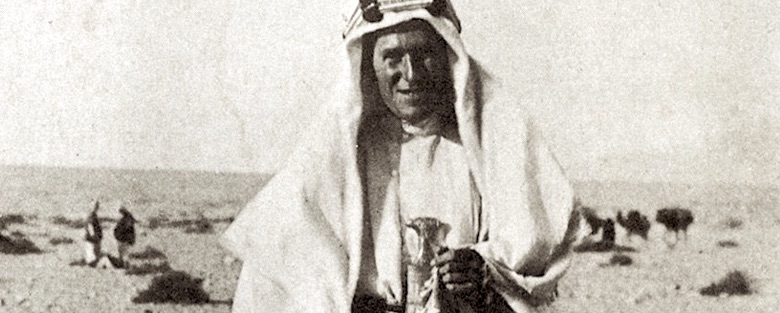
Thomas Edward Lawrence was an archaeologist, British Army Officer, an Aircraftsman in the RAF, Foreign Office Ambassador and a writer.
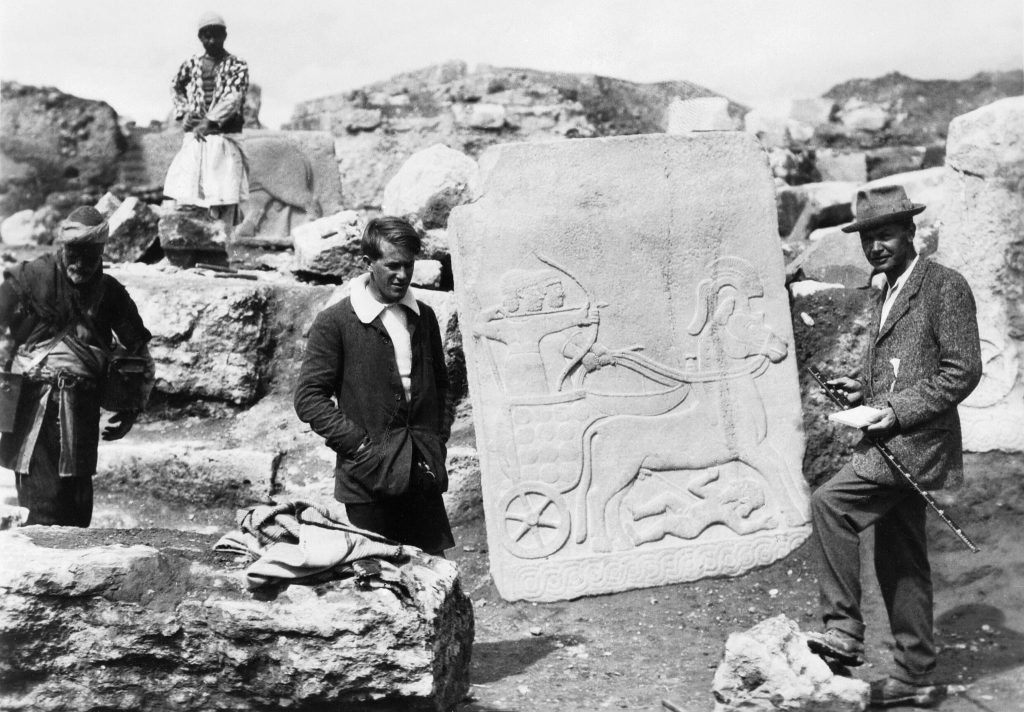
The Oxford educated Lawrence had worked as an archaeologist in Syria and Lebanon before WW1, having been given his first job by his tutor and mentor at Oxford, D. G. Hogarth. Later Lawrence was asked to gather information on Turkish and German interests in the region. By the outbreak of war in 1914 he was already known to some who were to form and head the newly formed Arab Bureau in Cairo. The Bureau needed those who spoke Arabic and knew their ways, so he joined Hogarth at the Bureau. His work initially was recording and mapping the whereabouts and battalion strengths of the Turkish Army. Access to all the mapping and knowledge of the Turks would be valuable to him in the future.
The Oxford educated Lawrence had worked as an archaeologist in Syria and Lebanon before WW1, having been given his first job by his tutor and mentor at Oxford, D. G. Hogarth. Later Lawrence was asked to gather information on Turkish and German interests in the region. By the outbreak of war in 1914 he was already known to some who were to form and head the newly formed Arab Bureau in Cairo. The Bureau needed those who spoke Arabic and knew their ways, so he joined Hogarth at the Bureau. His work initially was recording and mapping the whereabouts and battalion strengths of the Turkish Army. Access to all the mapping and knowledge of the Turks would be valuable to him in the future.
The situation in the Middle East was complex, the Ottoman Empire was on the wane but still occupied most of the area; a Muslim nation but not Arabic. The German influence created by the Berlin to Baghdad railway was to prove a deciding factor on the outbreak of hostilities, Turkey aligned themselves with Germany.
The extended Turkish Army did however have many Arab units and some high ranking Arabs too. Some saw this train of events to be an opportunity for the long hoped for Arab Nation to emerge and be independent.
The region though was split and oil interests muddied the waters. The British had its main influence in Cairo, Aden ( a major staging post) and the southern parts of what was then Mesopotamia and Persia and fell mostly under military orders from India. The French had designs on Syria and of course much against the British Government's wishes, France, had gone ahead and built the Suez Canal. The Canal was to prove a bonus, providing a barrier and preventing the Turkish Army from crossing into Egypt.
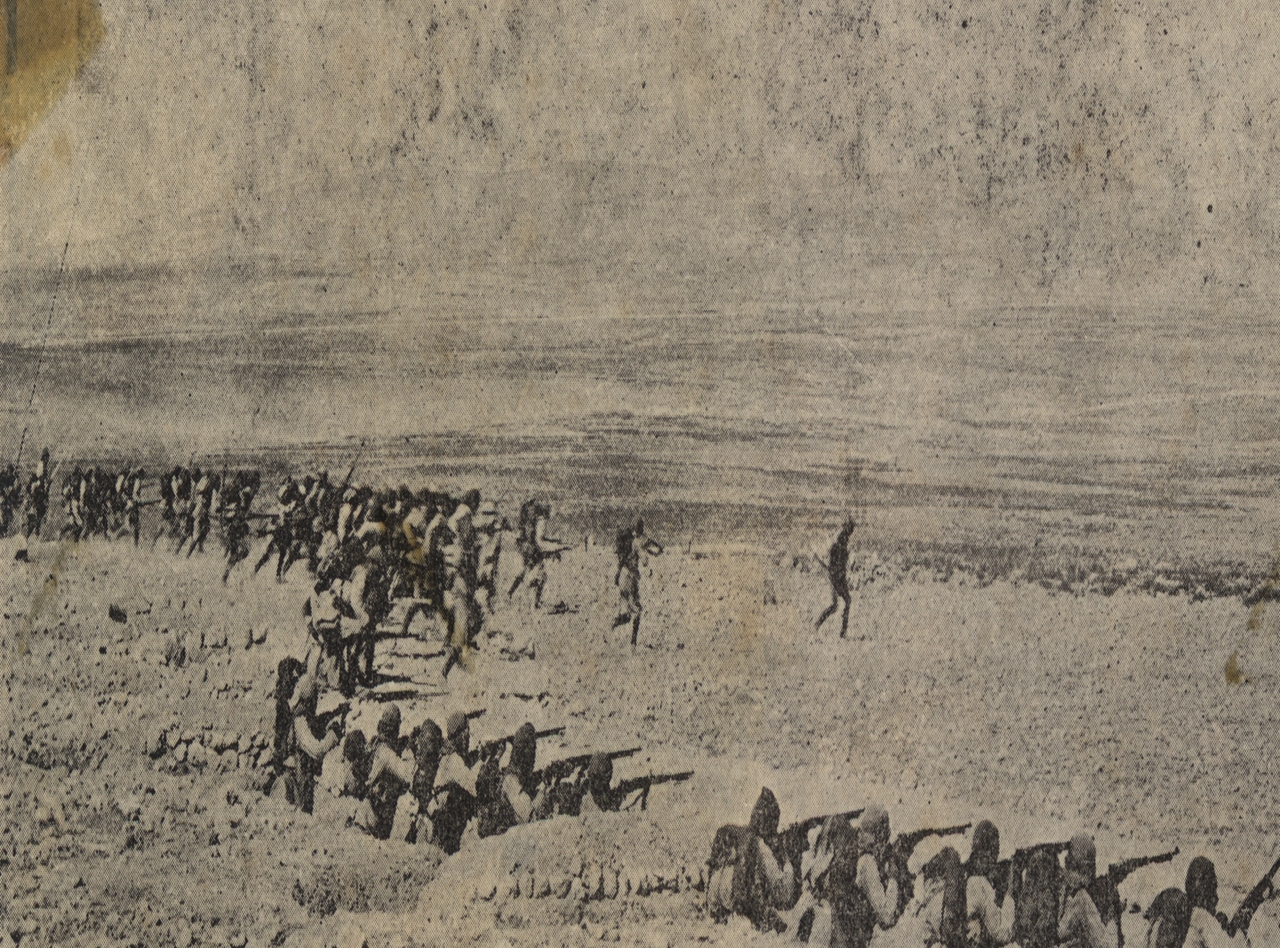
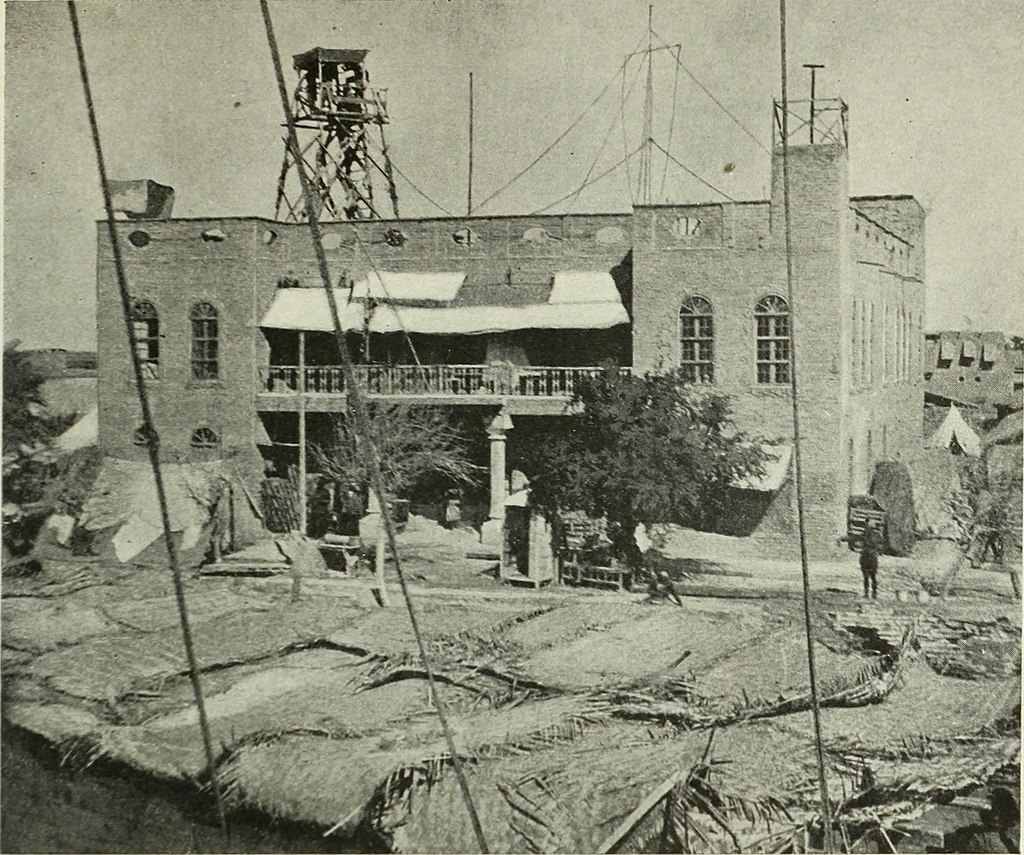
The British Indian Army had already started an offensive to protect its interests in southern Mesopotamia. In December 1915 the British had reached just south of Baghdad. Here they met determined Turkish forces and with the British supply lines already stretched they were forced to retreat after the Battle of Ctesiphon. They fell back to Kut. It was not an ideal place but they dug in under extreme pressure. Here the Turkish forces held the British. The Siege of Kut, as it was known, was a huge failure for the British; during the siege attempts were made to resolve the situation.
The extended Turkish Army did however have many Arab units and some high ranking Arabs too. Some saw this train of events to be an opportunity for the long hoped for Arab Nation to emerge and be independent.
The region though was split and oil interests muddied the waters. The British had its main influence in Cairo, Aden ( a major staging post) and the southern parts of what was then Mesopotamia and Persia and fell mostly under military orders from India. The French had designs on Syria and of course much against the British Government's wishes, France, had gone ahead and built the Suez Canal. The Canal was to prove a bonus, providing a barrier and preventing the Turkish Army from crossing into Egypt.
The British Indian Army had already started an offensive to protect its interests in southern Mesopotamia. In December 1915 the British had reached just south of Baghdad. Here they met determined Turkish forces and with the British supply lines already stretched they were forced to retreat after the Battle of Ctesiphon. They fell back to Kut. It was not an ideal place but they dug in under extreme pressure. Here the Turkish forces held the British. The Siege of Kut, as it was known, was a huge failure for the British; during the siege attempts were made to resolve the situation.
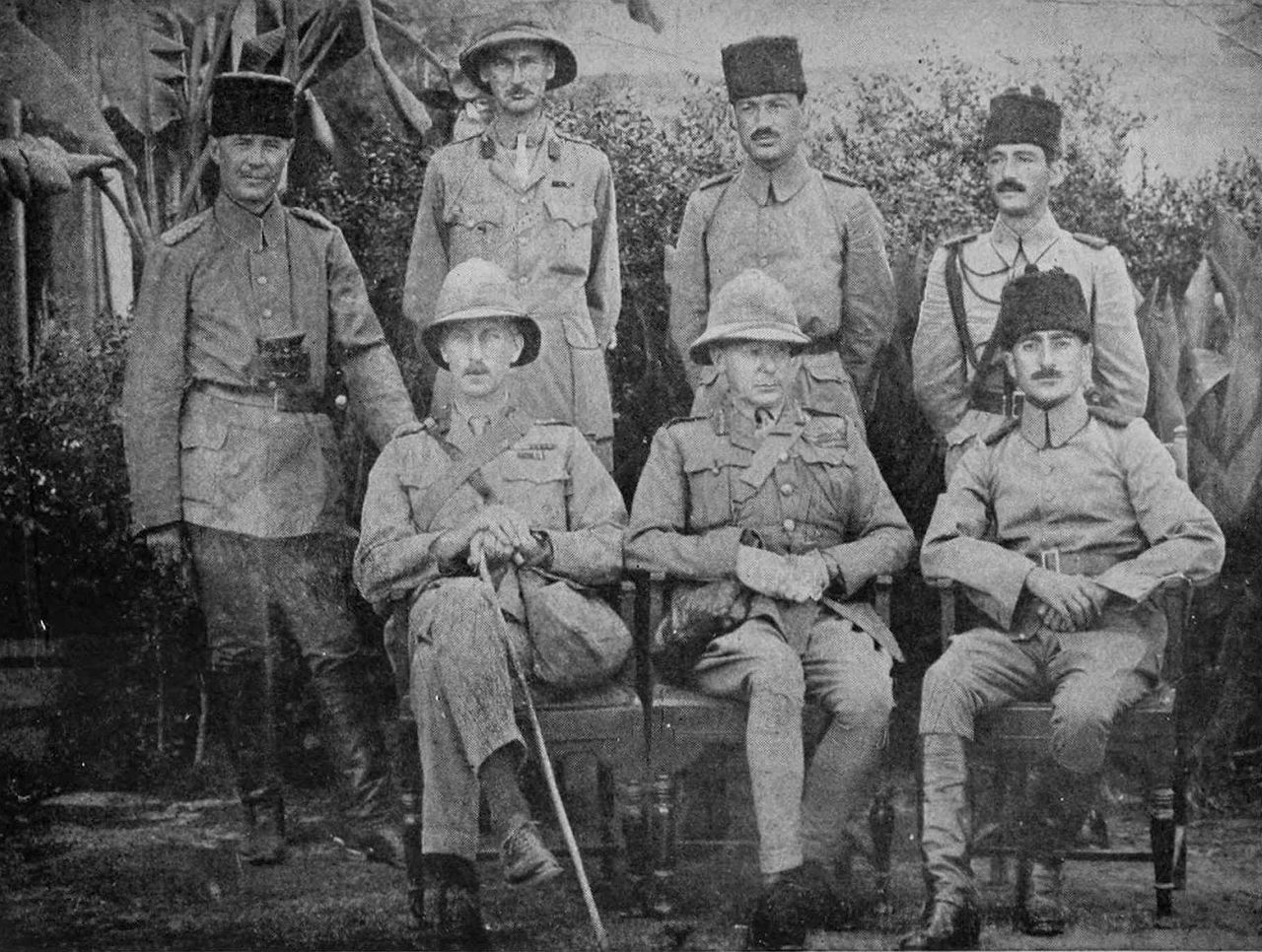
Relief expeditions were sent to attack the Turks and air drops to help those under siege but failed. In a last ditch attempt to resolve the situation the British Government sent from the Arab Bureau in Cairo, Aubrey Herbert and Lawrence, who respectively spoke fluent Turkish and Arabic. Their charge was to try to bribe the Turks into releasing the British Allied Army (Herbert) and to try to incite the Arabs to revolt within the Turkish Army (Lawrence). They had at their disposal £1m, although it is believed it was upped to £2m. It failed and after negotiations the wounded were allowed to leave and safe passage allowed for Aubrey and Lawrence.
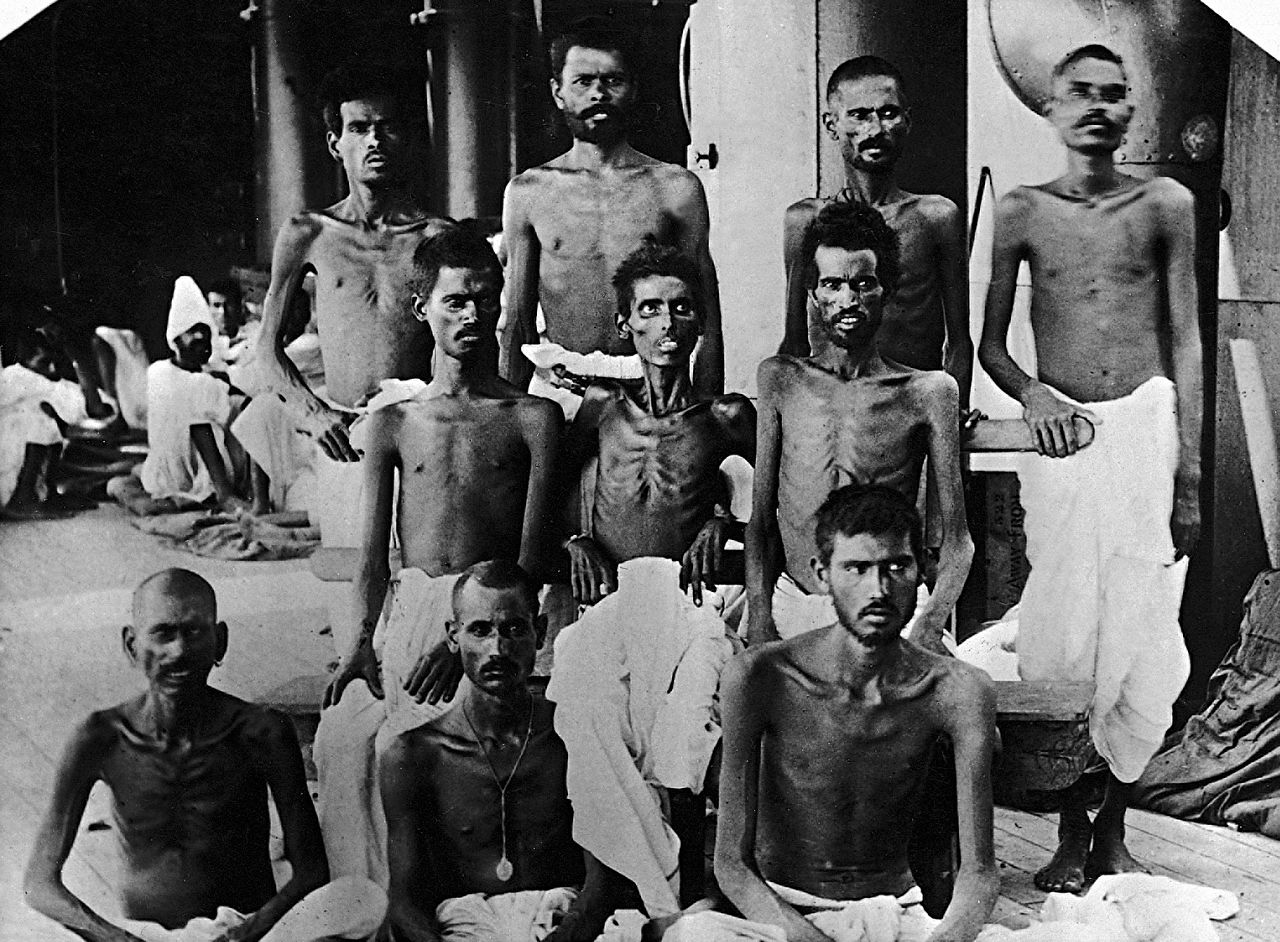
In all the campaign cost the British Allied forces some 30,000 men either killed or wounded. The condition of the wounded men being evacuated was appalling and would be the subject of questions asked in Parliament later. This defeat came only 3-4 months after the retreat from from Gallipoli. Kut to my mind must have had an influence on Lawrence and his attitude to the Turks later on in the campaign.
In all the campaign cost the British Allied forces some 30,000 men either killed or wounded. The condition of the wounded men being evacuated was appalling and would be the subject of questions asked in Parliament later. This defeat came only 3-4 months after the retreat from from Gallipoli. Kut to my mind must have had an influence on Lawrence and his attitude to the Turks later on in the campaign.
Read more..
The Arab Revolt
The Turkish appointed Sharif and Emir of Mecca, Hussein Ibn Ali al-Hashimi (check the photo below for details), who had been in secret talks with the British about the idea of the Arabs joining forces with the outcome of establishing an Arab Nation at the end. Just before this time another secret mission by the British was undertaken by a Captain William Shakespear out of Kuwait to visit Ibn Sa'ud, who ruled a Sheikhdom around Riyadh. Captain Shakespear through his mapping expeditions in the Arabian interior had befriended Ibn Sa'ud and he set out to seek a Treaty of Alliance between the British Government and Ibn Sa'ud. Shakespear was successful. Tragically he was killed very soon after while observing a battle between Ibn Sa'ud and his rival Ibn Rashid.
The Turks occupied the eastern Hedjaz, Akaba and the railway down to Medina. To the north the modern day Holy Lands, Jordan and Syria. In the south the lower Red Sea coastal Hedjaz had been cleared of Turks by the British and French Navies. Important ports had been secured and previously captured Ottoman Arab soldiers, from Mesopotamia were enlisted to form the new Arab Regular Army. ( A second campaign had been fought in Mesopotamia after Kut which was successful).
The success in the southern Hedjaz was brief, Mecca was taken but Medina was held by the Turks. Some 15,000 had retreated to join the well established garrison and crucially where the railway terminated. Here the Turks re-organised, took stock and in turn set out to inflict heavy casualties on the Arabs.
The Turks occupied the eastern Hedjaz, Akaba and the railway down to Medina. To the north the modern day Holy Lands, Jordan and Syria. In the south the lower Red Sea coastal Hedjaz had been cleared of Turks by the British and French Navies. Important ports had been secured and previously captured Ottoman Arab soldiers, from Mesopotamia were enlisted to form the new Arab Regular Army. ( A second campaign had been fought in Mesopotamia after Kut which was successful).
The success in the southern Hedjaz was brief, Mecca was taken but Medina was held by the Turks. Some 15,000 had retreated to join the well established garrison and crucially where the railway terminated. Here the Turks re-organised, took stock and in turn set out to inflict heavy casualties on the Arabs.
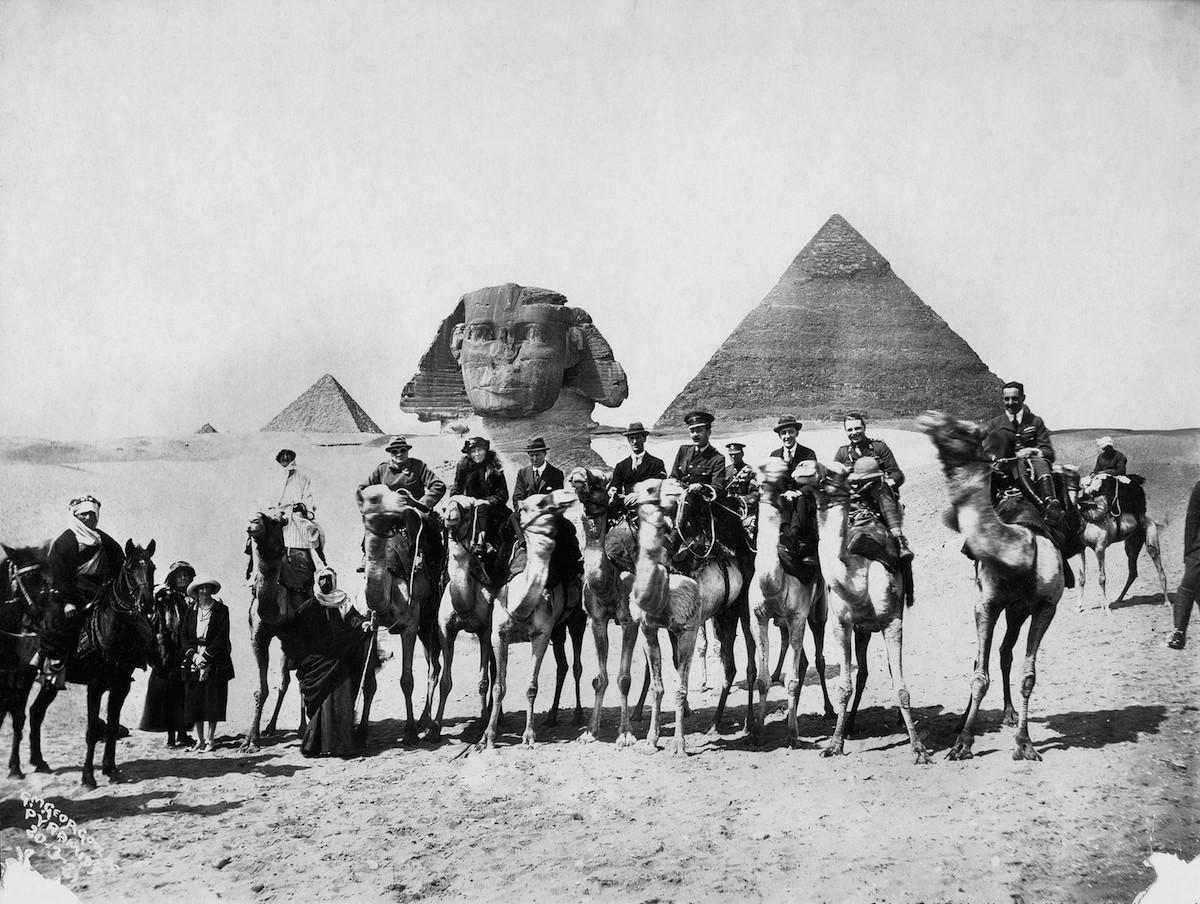
At this point Lawrence had the opportunity to visit the Hedjaz with Ronald Storrs, Oriental Secretary of the Residency in Cairo and a member of the Arab Bureau too. Lawrence took it upon himself to assess which of Sharif Ali's sons would be suitable to become the leader of the Arab Revolt. It should be noted that there were other British Officers involved independently at the time also promoting the Revolt.
Lawrence's imagination had been fired and on meeting Ali's son Faisal, Lawrence knew he had the man to lead the Revolt. Behind the scenes however, politicians both in England and France had other ideas for the outcome of the Revolt and an Independent Arab Nation was not one of them. For the UK interests Sir Mark Sykes had been appointed and on the French side, Monsieur François Georges-Picot. There has been much discussion as to when Lawrence found out the possibility of such an agreement but it is well documented that Lawrence met Sir Mark Sykes two days before Lawrence left on his epic journey to take Akaba, 9th May 1917 and would account for Lawrence's state of mind later in that journey. Nevertheless, Lawrence could well have convinced himself that if he could prove the Arabs worthy in fighting the Turks, then agreements could be changed in the future. Faisal had also met Sir Mark Sykes independently at the same time and while Faisal and Lawrence had become friends, Faisal may well have known about the possibility of future agreements but not told Lawrence as he had a job to do first.
Lawrence's task was onerous, how to organise different, fractious, often sworn enemies to fight as one against the Turks. They were poorly equipped and some still had past allegiances to the Turks. How he achieved this was later to become the legend, Lawrence of Arabia.
Lawrence realised that to try and create a regular army would be no easy task, better to leave them as small groups. Equip them with more modern weapons and teach them how to use mountain guns and explosives. Use their knowledge of the desert to surprise attack the Turks, niggle them and just disappear back into the landscape they came from. His success proved to be the catalyst to allow quite often warring tribes to join and be part of that success.
The main Arab Regulars had made their way up as far as Wejh under Faisal. The Turks were making forays out of Medina using the railway as a supply line. This had to stopped and for the Hedjaz campaign to be worthwhile, Akaba had to be taken.
Ironically some two years earlier Aubrey Herbert who was with Lawrence at the Arab Bureau, received a letter from his friend Mark Sykes. The contents of which quite clearly told Aubrey that a base should be established at Akaba, and an Intelligence Officer with large powers installed. The tribal Chiefs should be courted and the Hedjaz Railway be disrupted. (See Movers & Shakers).
The Red SeaPatrol had been engaged in shelling Akaba but the Turks had installed guns that faced the sea only. Memories of Gallipoli must have been to the fore and the attacks were not a success. Lawrence decided without telling the British Command to attack Akaba from the land. There were a few issues. He needed to increase his Arab Irregular Force and to lead the Turks into thinking that Akaba was not the target. He was well aware that some of the Arabs were not too fussy as to where their allegiance lay and he who put gold on the table won support. So he left Wejh at the beginning of May, heading north to cross the Hedjaz Railway at a fairly remote spot where he blew the rails up. From there northeast to the Wadi Shiran to engage with the Howeitat Arabs and gain support. He then went north to near Palmyra again to gain support possibly in the future. Heading south now to Damascus to gain support. A short diversion out to the Yarmuk Valley to cause disruption to the Turks. Finally back out to Bair to amass the army and then to head southeast towards Ma'an. Here they crossed the railway just south of Ghadir et Haj, destroying bridges and rail lines before heading west.
On the 2nd July 1917, Lawrence's Arab Irregulars found themselves near Ain Aba el Lissan, sniping at Turkish forces recently reinforced from Ma'an. This continued all day until sunset when Audah abu Tayi with fifty horsemen directly charged the main Turkish position from behind. This was the signal for the rest of the Arab force to charge from the high ground in the flank of the Turks. The Turks scattered and with a force of camels bearing down on them at thirty odd miles an hour it was a rout. Lawrence himself riding his camel and firing with a pistol accidentally shot his own camel, which crumpled under him, knocking Lawrence out for a period. In all 300 hundred Turks were killed and some 160 captured. The Turks that managed to escape headed down the Wadi Itm towards Guweira and Akaba. On the 4th July the Arab forces followed with Turkish outposts surrendering as they went. By the 5th July they were on the plain just leaving the Wadi Itm with Akaba in sight. All that was left between the Arabs and the sea were 300 Turkish troops whose main defences faced the sea. On the 6th July the Arab forces rode the last of the plain into Akaba with the Arab commander, Nasir, breaking the lines to prevent a total massacre of the garrison. Akaba had fallen.
The Arab and British Army now had their base and way into the Hedjaz secured. To the west Sir Archibald Murray, Commander of the British Forces, had been having a hard time in Gaza and was relieved of his command by General Allenby. Lawrence now had to get the news of the Arab success at Akaba to the General. So he set off for Cairo the same day across the Sinai to Suez and then Cairo. Initially the news was greeted with disbelief, Allenby, however, realised Lawrence's worth, and promised Lawrence all the equipment, men and aircraft needed to give the Arabs something to fight with and the Turks something to think about.
Lawrence returned to Akaba, where all the promised equipment started to arrive and the Regular Arab Army moved up from Wejh. Camels arrived along with a RAF Flight, an armoured car unit from Libya, then Lewis and Hodgkiss instructors, explosives and artillery instructors.
It should be said that the newly appointed High Commissioner for Egypt, Sir Reginald Wingate, a distinguished army officer himself, made every representation to those in high authority as to the enormity of Lawrence's achievement and recommended a Victoria Cross. Lawrence learnt the news in a letter from Wingate and was not at all comfortable with the move. Eventually he came out of it with a promotion to Major, a DSO and later the same year made a Companion of the Order of the Bath, all of which horrified him as revealed in letters to his family confirm.
Lawrence's imagination had been fired and on meeting Ali's son Faisal, Lawrence knew he had the man to lead the Revolt. Behind the scenes however, politicians both in England and France had other ideas for the outcome of the Revolt and an Independent Arab Nation was not one of them. For the UK interests Sir Mark Sykes had been appointed and on the French side, Monsieur François Georges-Picot. There has been much discussion as to when Lawrence found out the possibility of such an agreement but it is well documented that Lawrence met Sir Mark Sykes two days before Lawrence left on his epic journey to take Akaba, 9th May 1917 and would account for Lawrence's state of mind later in that journey. Nevertheless, Lawrence could well have convinced himself that if he could prove the Arabs worthy in fighting the Turks, then agreements could be changed in the future. Faisal had also met Sir Mark Sykes independently at the same time and while Faisal and Lawrence had become friends, Faisal may well have known about the possibility of future agreements but not told Lawrence as he had a job to do first.
Lawrence's task was onerous, how to organise different, fractious, often sworn enemies to fight as one against the Turks. They were poorly equipped and some still had past allegiances to the Turks. How he achieved this was later to become the legend, Lawrence of Arabia.
Lawrence realised that to try and create a regular army would be no easy task, better to leave them as small groups. Equip them with more modern weapons and teach them how to use mountain guns and explosives. Use their knowledge of the desert to surprise attack the Turks, niggle them and just disappear back into the landscape they came from. His success proved to be the catalyst to allow quite often warring tribes to join and be part of that success.
The main Arab Regulars had made their way up as far as Wejh under Faisal. The Turks were making forays out of Medina using the railway as a supply line. This had to stopped and for the Hedjaz campaign to be worthwhile, Akaba had to be taken.
Ironically some two years earlier Aubrey Herbert who was with Lawrence at the Arab Bureau, received a letter from his friend Mark Sykes. The contents of which quite clearly told Aubrey that a base should be established at Akaba, and an Intelligence Officer with large powers installed. The tribal Chiefs should be courted and the Hedjaz Railway be disrupted. (See Movers & Shakers).
The Red SeaPatrol had been engaged in shelling Akaba but the Turks had installed guns that faced the sea only. Memories of Gallipoli must have been to the fore and the attacks were not a success. Lawrence decided without telling the British Command to attack Akaba from the land. There were a few issues. He needed to increase his Arab Irregular Force and to lead the Turks into thinking that Akaba was not the target. He was well aware that some of the Arabs were not too fussy as to where their allegiance lay and he who put gold on the table won support. So he left Wejh at the beginning of May, heading north to cross the Hedjaz Railway at a fairly remote spot where he blew the rails up. From there northeast to the Wadi Shiran to engage with the Howeitat Arabs and gain support. He then went north to near Palmyra again to gain support possibly in the future. Heading south now to Damascus to gain support. A short diversion out to the Yarmuk Valley to cause disruption to the Turks. Finally back out to Bair to amass the army and then to head southeast towards Ma'an. Here they crossed the railway just south of Ghadir et Haj, destroying bridges and rail lines before heading west.
On the 2nd July 1917, Lawrence's Arab Irregulars found themselves near Ain Aba el Lissan, sniping at Turkish forces recently reinforced from Ma'an. This continued all day until sunset when Audah abu Tayi with fifty horsemen directly charged the main Turkish position from behind. This was the signal for the rest of the Arab force to charge from the high ground in the flank of the Turks. The Turks scattered and with a force of camels bearing down on them at thirty odd miles an hour it was a rout. Lawrence himself riding his camel and firing with a pistol accidentally shot his own camel, which crumpled under him, knocking Lawrence out for a period. In all 300 hundred Turks were killed and some 160 captured. The Turks that managed to escape headed down the Wadi Itm towards Guweira and Akaba. On the 4th July the Arab forces followed with Turkish outposts surrendering as they went. By the 5th July they were on the plain just leaving the Wadi Itm with Akaba in sight. All that was left between the Arabs and the sea were 300 Turkish troops whose main defences faced the sea. On the 6th July the Arab forces rode the last of the plain into Akaba with the Arab commander, Nasir, breaking the lines to prevent a total massacre of the garrison. Akaba had fallen.
The Arab and British Army now had their base and way into the Hedjaz secured. To the west Sir Archibald Murray, Commander of the British Forces, had been having a hard time in Gaza and was relieved of his command by General Allenby. Lawrence now had to get the news of the Arab success at Akaba to the General. So he set off for Cairo the same day across the Sinai to Suez and then Cairo. Initially the news was greeted with disbelief, Allenby, however, realised Lawrence's worth, and promised Lawrence all the equipment, men and aircraft needed to give the Arabs something to fight with and the Turks something to think about.
Lawrence returned to Akaba, where all the promised equipment started to arrive and the Regular Arab Army moved up from Wejh. Camels arrived along with a RAF Flight, an armoured car unit from Libya, then Lewis and Hodgkiss instructors, explosives and artillery instructors.
It should be said that the newly appointed High Commissioner for Egypt, Sir Reginald Wingate, a distinguished army officer himself, made every representation to those in high authority as to the enormity of Lawrence's achievement and recommended a Victoria Cross. Lawrence learnt the news in a letter from Wingate and was not at all comfortable with the move. Eventually he came out of it with a promotion to Major, a DSO and later the same year made a Companion of the Order of the Bath, all of which horrified him as revealed in letters to his family confirm.
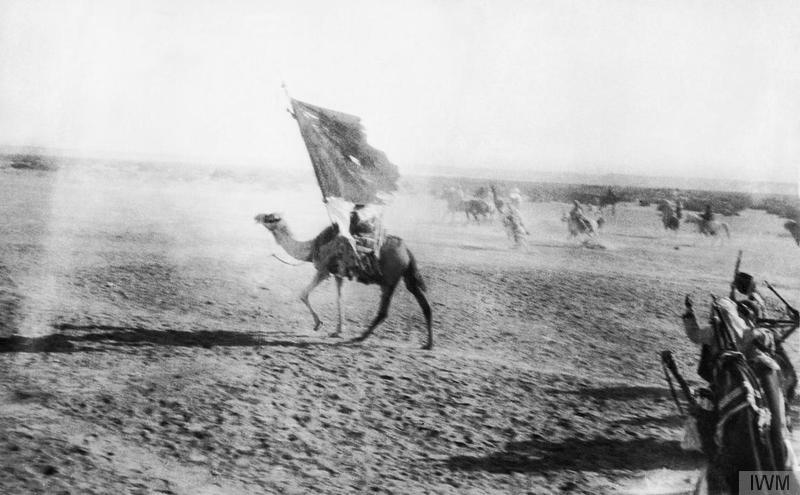
Arab flag bearer entering Akaba, photo taken by Lawrence.
6th July 1917.
© IWM Q59193
Read more..
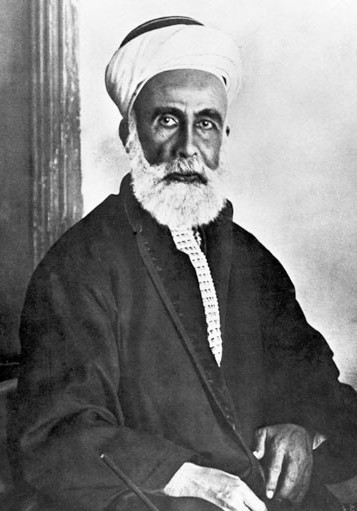
Hussein ibn Ali al-Hashimi
After Akaba
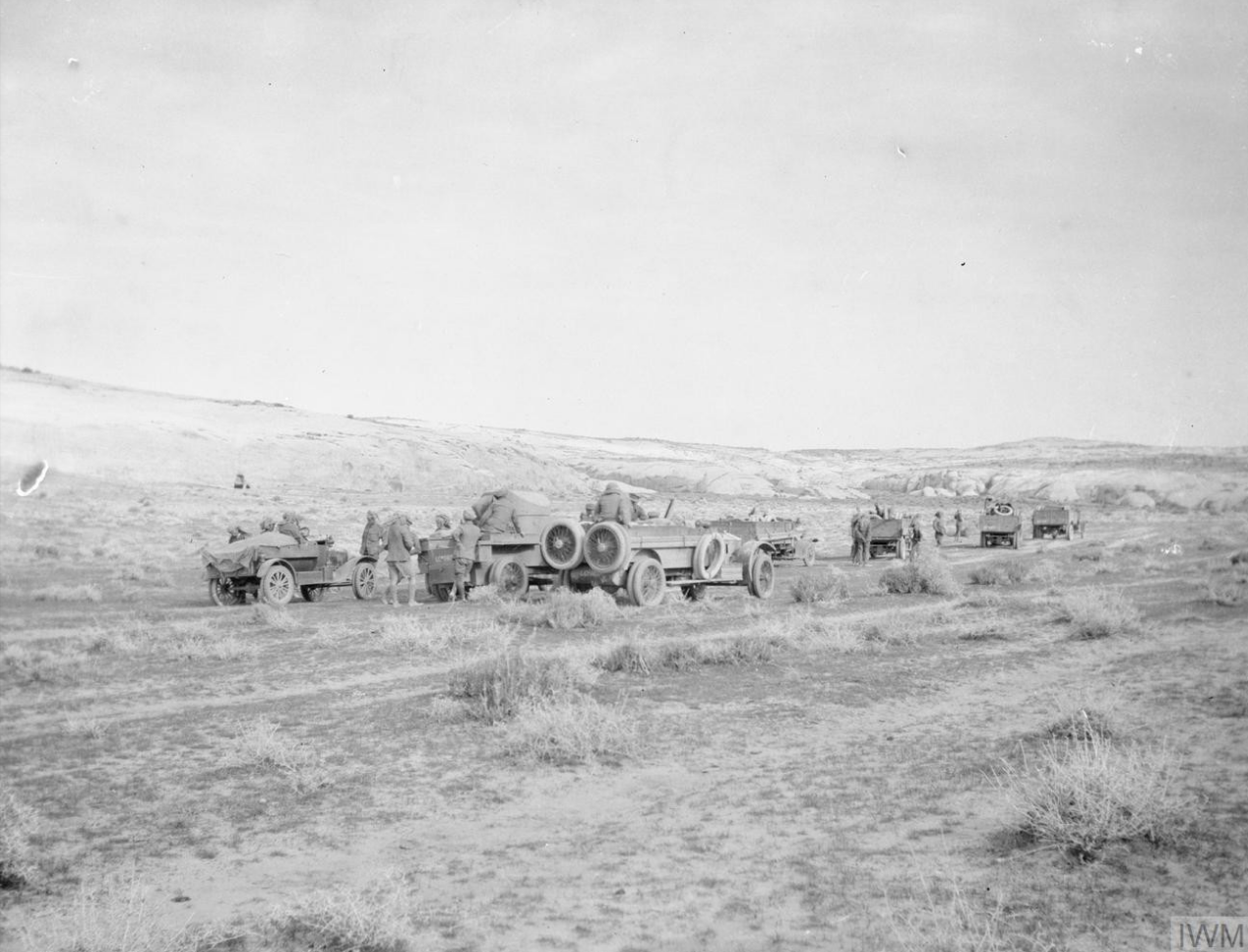
Armoured cars and tenders making for Abu Lissan
© IWM Q 59529
Akaba having been taken, Lawrence and his Arab Irregulars now had some of the resources and freedom to play havoc with the Turks in attacking and disrupting the railway line. Very soon the price on Lawrence's head as a bounty, dead or alive, increased rapidly. This was not lost on Lawrence and he soon had round him his own dedicated bodyguard. Known as the Ageyle, they were a flamboyant and by all accounts, ruthless bunch of individuals but devoted to Lawrence.
Explosive techniques were developed by associated British Officers working in the same area; most notably one Major Herbert Garland. He was assigned to teach Lawrence and the Arabs his techniques. It is believed his mining method was the first time a moving train was derailed by explosives. Another method used by Lawrence was the tulip mine which forced the rails to twist making the rails beyond repair. Curved sections of track we targeted as these required to be made at main workshop facilities like Ma'an. Along with bridges it was all done to create as much disruption to the railway. With his Arab Irregulars, Lawrence could take out or hold a remote outpost with ease and then just blend back into the desert, knowing the Turks would have little or no chance of finding them……………so the legend was born.
Explosive techniques were developed by associated British Officers working in the same area; most notably one Major Herbert Garland. He was assigned to teach Lawrence and the Arabs his techniques. It is believed his mining method was the first time a moving train was derailed by explosives. Another method used by Lawrence was the tulip mine which forced the rails to twist making the rails beyond repair. Curved sections of track we targeted as these required to be made at main workshop facilities like Ma'an. Along with bridges it was all done to create as much disruption to the railway. With his Arab Irregulars, Lawrence could take out or hold a remote outpost with ease and then just blend back into the desert, knowing the Turks would have little or no chance of finding them……………so the legend was born.
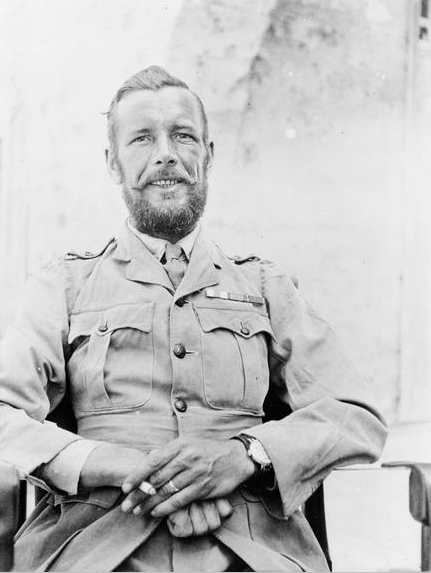
Major Herbert Garland, MC OBE.
By the summer of 1918 Allenby had started his push north to Damascus. Lawrence with the Arabs remained on his right flank heading northward too. It was both Lawrence's and Feisal's wish to get to Damascus before Allenby, as the Arabs wanted to lay claim to Damascus as their capital for the new Arab Nation. This they sort of did, certainly they were there before Allenby but hours before Lawrence and Faisal arrived it is believed a contingent of the Australian Light Horse entered but were so intent on routing the Turks, passed through pursuit of fleeing Turks.
When Allenby arrived the city was not under control and a meeting took place between Allenby and Faisal. At the meeting the terms of the Sykes-Picot Agreement were revealed. The outcome of which saw the French taking control of Syria and Lebanon.
Very much later Faisal was made King of what is now Iraq, Abdullah his brother took over the TransJordan, later becoming the Hashemite Kingdom of Jordan.
When Allenby arrived the city was not under control and a meeting took place between Allenby and Faisal. At the meeting the terms of the Sykes-Picot Agreement were revealed. The outcome of which saw the French taking control of Syria and Lebanon.
Very much later Faisal was made King of what is now Iraq, Abdullah his brother took over the TransJordan, later becoming the Hashemite Kingdom of Jordan.
Lawrence returned to England unhappy at the recent events, he finally sort solace by joining the RAF, changed his name but a colleague sold him out to the newspapers. He tried the Army but he found it not to his liking. After much arm twisting among friends he managed to get back into the RAF, becoming involved in developing what was later to become the RAF's fast rescue tenders.. These crafts saving many ditched airmen in WW2.
On retirement from the RAF, an event he was not looking forward to, he devoted himself to his cottage and riding out whenever he could on his beloved motorcycle. It was a Brough Superior SS100, the Rolls Royce of motorcycles at the time. On 13th May 1935 he was involved in a crash with two bicycles, which resulted in him being in a coma for six days. He died on Sunday 19th May from the severe head injuries he had received.
Couple of facts that get omitted from history.
As a result of Lawrence's accident the neurosurgeon attending him (Sir Hugh W. B. Cairns) went on to advocate the use of head protection by motorcyclists and resulted in the modern crash helmet.
Lawrence made every effort not to benefit financially from his exploits and any profits that were subsequently made from the sale of The Seven Pillars of Wisdom, were donated to an RAF Charity.
On retirement from the RAF, an event he was not looking forward to, he devoted himself to his cottage and riding out whenever he could on his beloved motorcycle. It was a Brough Superior SS100, the Rolls Royce of motorcycles at the time. On 13th May 1935 he was involved in a crash with two bicycles, which resulted in him being in a coma for six days. He died on Sunday 19th May from the severe head injuries he had received.
Couple of facts that get omitted from history.
As a result of Lawrence's accident the neurosurgeon attending him (Sir Hugh W. B. Cairns) went on to advocate the use of head protection by motorcyclists and resulted in the modern crash helmet.
Lawrence made every effort not to benefit financially from his exploits and any profits that were subsequently made from the sale of The Seven Pillars of Wisdom, were donated to an RAF Charity.
Read more..