Epilogue
'I can't write 'Finis' to this book, while I am
still serving. I hope sometimes,
that I will never write it'.
The Mint, 352087 A/c Ross
The news of Lawrence's death naturally came as a shock to many who knew him well. I am drawn, however to comments passed by Sir Ronald Storrs. Who one could argue, was the man who saw Lawrence off on his journey to become the hero.
In October I made my third descent to the Hejaz. The additional justification for my attempt, by reproducing so much of my third 1916 journal, to give the background and atmosphere of this particular voyage, is partly (as elsewhere in my book) to recall the immediate sensations; but far more because it was through - and quickly after - this voyage, that Lawrence of Carchemish, of Cairo - of any place for a little while - became permanently Lawrence of Arabia.
His enduring world fame makes it difficult to replace him now in his original perspective, and I must confess, almost with shame, that my sentiments in applying for him were mainly gratitude for his assistance in the Hejaz stamp issue and other matters, the high value I attached to his judgement on any question, and his admirable company.
His enduring world fame makes it difficult to replace him now in his original perspective, and I must confess, almost with shame, that my sentiments in applying for him were mainly gratitude for his assistance in the Hejaz stamp issue and other matters, the high value I attached to his judgement on any question, and his admirable company.
Ronald Storrs. 'Orientations'.
In his book 'Orientations'. Storrs, apart from chronological mentions of Lawrence, devotes a whole chapter to TEL. As Storrs pointed out, most of the letters between the two men never survived and more's the pity for that. Sadly all Storrs's books, papers and indeed his property were destroyed by fire just before writing his book, which was eventually published two years after Lawrence's death.
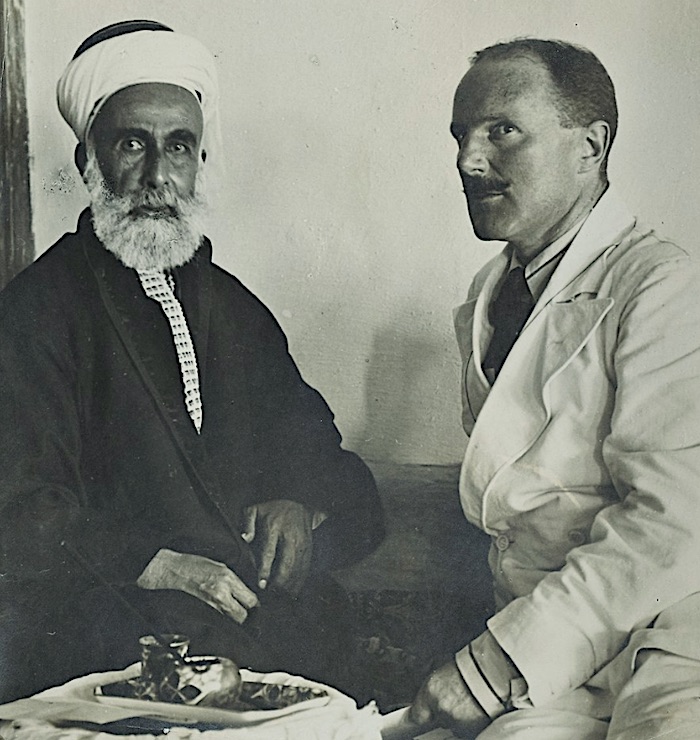
Hussein and Storrs
©
It is a credit to Storrs that he found it necessary to explain to his readers some aspects that he and others knew of Lawrence: and to perhaps put some records straight.
He had also remembered, that Lawrence was going through a 'bad patch' just before leaving the RAF, which could quite possibly have been triggered by his retirement. It seems to have been theme that Lawrence himself expressed in letters to others too.
Storrs was also aware that Lawrence 'hated society but loved company'. At this point I think it is more appropriate to allow Storrs to continue in his own words from his book, Orientations:-
He had also remembered, that Lawrence was going through a 'bad patch' just before leaving the RAF, which could quite possibly have been triggered by his retirement. It seems to have been theme that Lawrence himself expressed in letters to others too.
Storrs was also aware that Lawrence 'hated society but loved company'. At this point I think it is more appropriate to allow Storrs to continue in his own words from his book, Orientations:-
“Nevertheless, Lawrence liked sometimes to walk and talk with friends. The simplicity of his life was extreme. He smoked no tobacco, he drank no alcohol; but alas, he used a drug. His drug was speed, and speed was the dope which cost him his life. He once raced along the open road against an aeroplane, and led it for nearly a quarter of an hour.
Consider the variety of elements in his composition. It has been given to few to achieve greatness and to enshrine that greatness in splendid prose: to which other of these few has been added the fastidious artistry to plan every detail of the setting up, the illustration, the printing and the binding of the material presentation of his genius? On any topic he was one of those who let fall, whether in speech or writing, the creative and illuminating idea or phrase unmistakably his, signed all over — which held your memory and recharged your intellectual and spiritual batteries.
Lawrence suffered acutely from public exaggeration in all directions. Like Bassanio he had chosen the leaden casket ‘’Who chooseth me must give and hazard all he hath.” And his reputation when alive, and even after, has been subjected by some to a steady dribble of depreciation. We are told that his military operations were on a small scale. So were those of Thermopylae and of Agincourt. We are told that anybody could have done what he did, with Allenby behind him, backed by the golden sovereigns of the British Treasury. But Paladins of the stamp and stature of an Allenby do not accord themselves, nor the resources of the British Treasury to an “anybody’’. He was accused of a publicity engineered by intentional mystification; and indeed it must have irritated some other public servants to find a man without a handle before his name or letters after it, without a dress suit and with an income of under a hundred a year, nevertheless pursued and chronicled by an eager limelight which seemed in comparison to black out their particular merits. I have even heard his strong columns of English belittled as having been built, as he said himself, upon the foundation of Doughty; and true it is, that Doughty was no less his literary ancestor, than Gibbon Macaulay’s. Dante gloried in “taking his fine style from his master”, Virgil. If Lawrence lit his candle from Doughty’s flame, was the candle any less his own? There are two classes of public servant. Of one it is said: “What is he doing now?” Of the other: “who is Minister of this or Governor of that.” The first category will interest and arrest and fascinate the world. Lawrence was one of those first. Mr Winston Churchill is one of them, and so is Mr Lloyd George. The second, a far more numerous category will be identified as occupying most of the best places.
Lawrence was throughout the last months of his life oppressed by gloomy forebodings. In one of his later letters he spoke of “an utterly blank wall’’ after leaving his beloved R.A.F.; one of his latest to me ends with three hopeless words of the man of Tarsus. (See below)
Consider the variety of elements in his composition. It has been given to few to achieve greatness and to enshrine that greatness in splendid prose: to which other of these few has been added the fastidious artistry to plan every detail of the setting up, the illustration, the printing and the binding of the material presentation of his genius? On any topic he was one of those who let fall, whether in speech or writing, the creative and illuminating idea or phrase unmistakably his, signed all over — which held your memory and recharged your intellectual and spiritual batteries.
Lawrence suffered acutely from public exaggeration in all directions. Like Bassanio he had chosen the leaden casket ‘’Who chooseth me must give and hazard all he hath.” And his reputation when alive, and even after, has been subjected by some to a steady dribble of depreciation. We are told that his military operations were on a small scale. So were those of Thermopylae and of Agincourt. We are told that anybody could have done what he did, with Allenby behind him, backed by the golden sovereigns of the British Treasury. But Paladins of the stamp and stature of an Allenby do not accord themselves, nor the resources of the British Treasury to an “anybody’’. He was accused of a publicity engineered by intentional mystification; and indeed it must have irritated some other public servants to find a man without a handle before his name or letters after it, without a dress suit and with an income of under a hundred a year, nevertheless pursued and chronicled by an eager limelight which seemed in comparison to black out their particular merits. I have even heard his strong columns of English belittled as having been built, as he said himself, upon the foundation of Doughty; and true it is, that Doughty was no less his literary ancestor, than Gibbon Macaulay’s. Dante gloried in “taking his fine style from his master”, Virgil. If Lawrence lit his candle from Doughty’s flame, was the candle any less his own? There are two classes of public servant. Of one it is said: “What is he doing now?” Of the other: “who is Minister of this or Governor of that.” The first category will interest and arrest and fascinate the world. Lawrence was one of those first. Mr Winston Churchill is one of them, and so is Mr Lloyd George. The second, a far more numerous category will be identified as occupying most of the best places.
Lawrence was throughout the last months of his life oppressed by gloomy forebodings. In one of his later letters he spoke of “an utterly blank wall’’ after leaving his beloved R.A.F.; one of his latest to me ends with three hopeless words of the man of Tarsus. (See below)
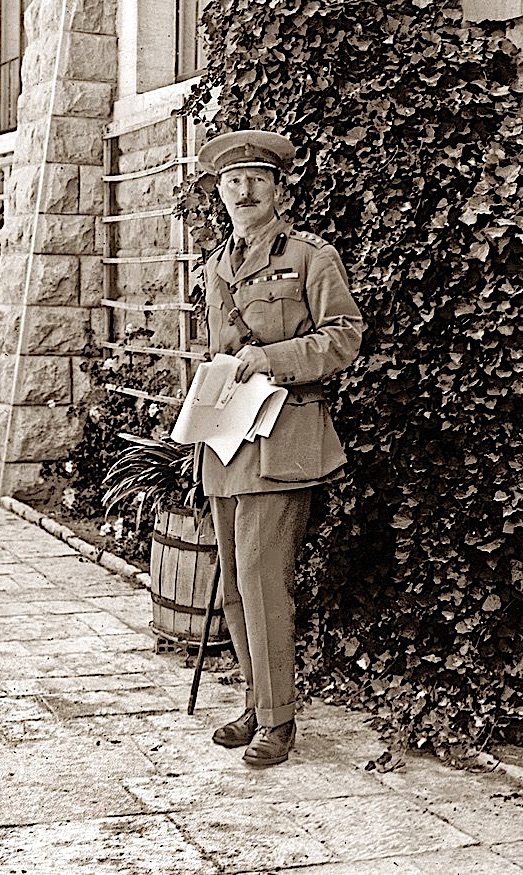
Storrs in Jerusalem where he was appointed Military Governor.
Continued…….
Lawrence items carried a news value of hard cash, so that when at the end of his Air service he returned to the cottage at Clouds Hill, his welcome home was a row of strange faces blinking and dodging behind a battery of cameras. He fled the place awhile, then crept in, he hoped secretly, by night. They stoned his roof to make him appear. One forced his way in. Lawrence went for him, knocked him down and threw him out. His friend found him trembling - “so many years since I’ve struck a man”. There is no close season for heroes.
Every day, for the last three weeks of his life, a bird would flutter to his window, tapping incessantly with its beak upon the pane. If he moved to another window, the bird followed and tapped again. The strange insistence was so visibly fraying his nerves that one morning, when he had gone out, his friend shot the bird. In that same hour, wrenching his handle-bars for the last time, Lawrence was flung over them sixty feet head first on to the granite-hard tarmac.
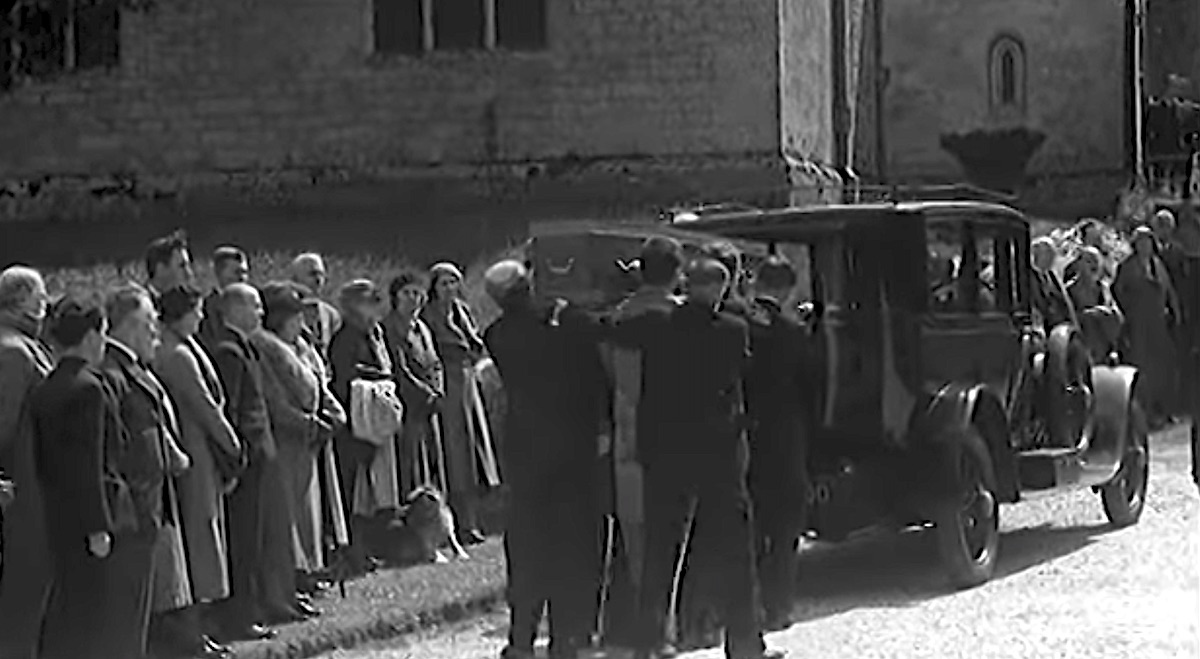
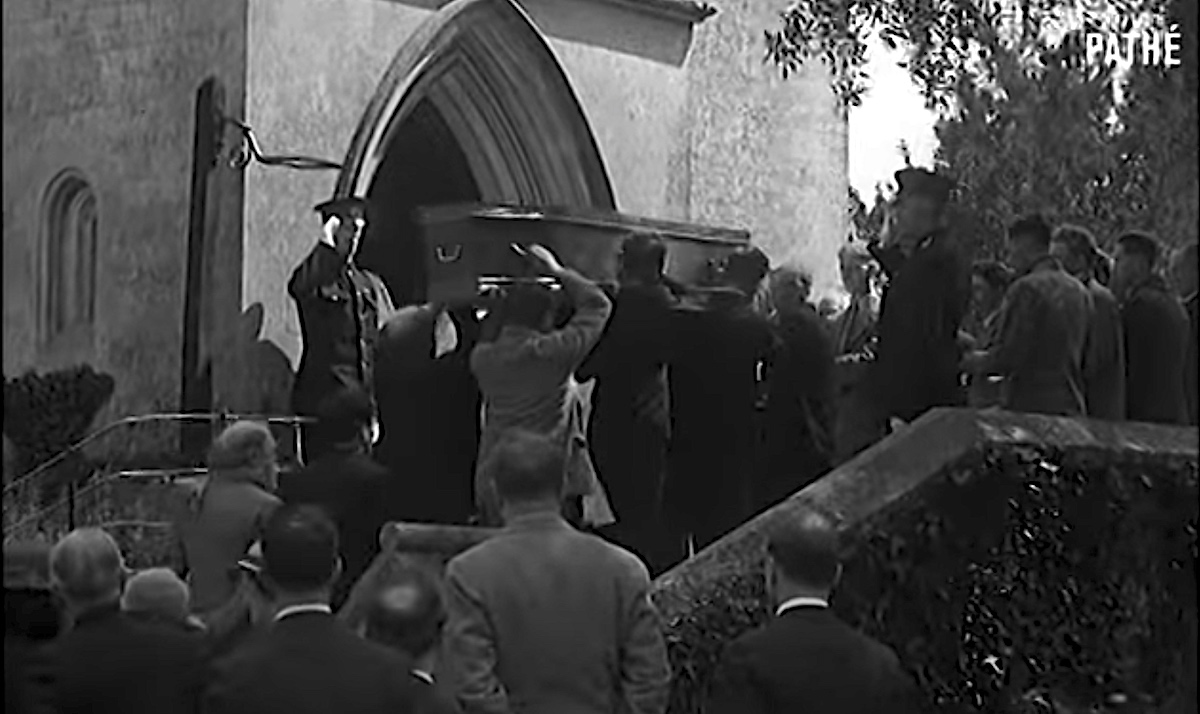
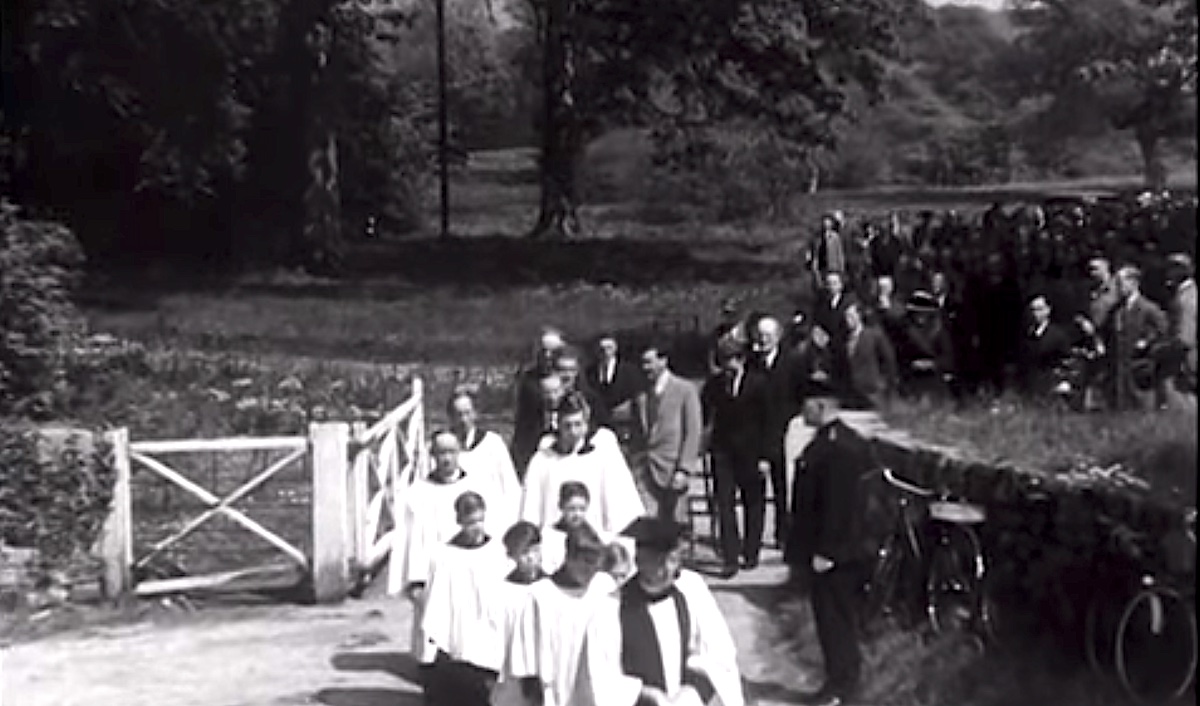
I stood beside him lying swathed in fleecy wool; stayed until the plain oak coffin was screwed down. There was nothing else in the mortuary chamber but a little altar behind his head with some lilies of the valley and red roses. I had come prepared to be greatly shocked by what I saw, but his injuries had been at the back of his head, and beyond some scarring and discolouration over the left eye, his countenance was not marred. His nose was sharper and delicately curved, and his chin less square. Seen thus, his face was the face of Dante with perhaps the more relentless mouth of Savonarola; incredibly calm, with the faintest flicker of disdain. The rhythmic planes of his features gradually became the symbolised impression of all mankind, moulded by an inexorable destiny. Nothing of his hair, nor of his hands was showing; only a powerful cowled mask, dark-stained ivory alive against the dead chemical sterility of the wrappings. It was somehow unreal to be watching beside him in these cerements, so strangely resembling the aba the kuffiya and the aqal of an Arab Chief, as he lay in his last littlest room, very grave and strong and noble. Selfish, to be alone with this splendour; I was sorry, too late, that neither Augustus John nor Eric Kennington, though both within a few hundred yards, should have had the chance to preserve it for the world. As I looked I remembered that my first sight of death had been my beloved Arabic tutor at Cambridge, thirty-one years before, Hassan Tewfik ibn Abd al-Rahman Bey al-Adli - may God be well pleased with them both. As we carried the coffin into and out of the little church the clicking Kodaks and the whirring reels extracted from the dead body their last “personal” publicity.
Some knew one side of Lawrence, some another. I wondered then if any knew him at all, or could imagine what had been his purpose, what the frontiers of his being. Could he have grown old? Had he ever been young? Some think he intended to resume action, for his country. Others that he would have created at least one more great work, for like Plato he felt deeply that what gives life its value is the sight, however revealed, of Eternal Beauty. In this he is with the great Elizabethans - Sir Philip Sidney; with the great Victorians - Charles Gordon - whose whole lives, free from fear and gain (those old perverters of mankind) are a protest against the guaranteed, the pensioned, the standardised and the safety-first existence. Like them Lawrence, even without his work, without his book, was and remains a standard and a touchstone of reality in life. That vast convulsion of human nature, the War, may have thrown up greater figures; none more gallantly yet practically romantic than the shy, slight, unaccountable emanation of genius who will live in history as Lawrence of Arabia.
Lawrence items carried a news value of hard cash, so that when at the end of his Air service he returned to the cottage at Clouds Hill, his welcome home was a row of strange faces blinking and dodging behind a battery of cameras. He fled the place awhile, then crept in, he hoped secretly, by night. They stoned his roof to make him appear. One forced his way in. Lawrence went for him, knocked him down and threw him out. His friend found him trembling - “so many years since I’ve struck a man”. There is no close season for heroes.
Every day, for the last three weeks of his life, a bird would flutter to his window, tapping incessantly with its beak upon the pane. If he moved to another window, the bird followed and tapped again. The strange insistence was so visibly fraying his nerves that one morning, when he had gone out, his friend shot the bird. In that same hour, wrenching his handle-bars for the last time, Lawrence was flung over them sixty feet head first on to the granite-hard tarmac.
I stood beside him lying swathed in fleecy wool; stayed until the plain oak coffin was screwed down. There was nothing else in the mortuary chamber but a little altar behind his head with some lilies of the valley and red roses. I had come prepared to be greatly shocked by what I saw, but his injuries had been at the back of his head, and beyond some scarring and discolouration over the left eye, his countenance was not marred. His nose was sharper and delicately curved, and his chin less square. Seen thus, his face was the face of Dante with perhaps the more relentless mouth of Savonarola; incredibly calm, with the faintest flicker of disdain. The rhythmic planes of his features gradually became the symbolised impression of all mankind, moulded by an inexorable destiny. Nothing of his hair, nor of his hands was showing; only a powerful cowled mask, dark-stained ivory alive against the dead chemical sterility of the wrappings. It was somehow unreal to be watching beside him in these cerements, so strangely resembling the aba the kuffiya and the aqal of an Arab Chief, as he lay in his last littlest room, very grave and strong and noble. Selfish, to be alone with this splendour; I was sorry, too late, that neither Augustus John nor Eric Kennington, though both within a few hundred yards, should have had the chance to preserve it for the world. As I looked I remembered that my first sight of death had been my beloved Arabic tutor at Cambridge, thirty-one years before, Hassan Tewfik ibn Abd al-Rahman Bey al-Adli - may God be well pleased with them both. As we carried the coffin into and out of the little church the clicking Kodaks and the whirring reels extracted from the dead body their last “personal” publicity.
Some knew one side of Lawrence, some another. I wondered then if any knew him at all, or could imagine what had been his purpose, what the frontiers of his being. Could he have grown old? Had he ever been young? Some think he intended to resume action, for his country. Others that he would have created at least one more great work, for like Plato he felt deeply that what gives life its value is the sight, however revealed, of Eternal Beauty. In this he is with the great Elizabethans - Sir Philip Sidney; with the great Victorians - Charles Gordon - whose whole lives, free from fear and gain (those old perverters of mankind) are a protest against the guaranteed, the pensioned, the standardised and the safety-first existence. Like them Lawrence, even without his work, without his book, was and remains a standard and a touchstone of reality in life. That vast convulsion of human nature, the War, may have thrown up greater figures; none more gallantly yet practically romantic than the shy, slight, unaccountable emanation of genius who will live in history as Lawrence of Arabia.
Ronald Storrs. 'Orientations'.
The Man of Tarsus:-
From the Greek epitaph of despair
‘‘Here lie I of Tarsus
Never having married, and I would that my father had not.”
Mackail, Select Epigrams, p. 172, 1911.
From the Greek epitaph of despair
‘‘Here lie I of Tarsus
Never having married, and I would that my father had not.”
Mackail, Select Epigrams, p. 172, 1911.
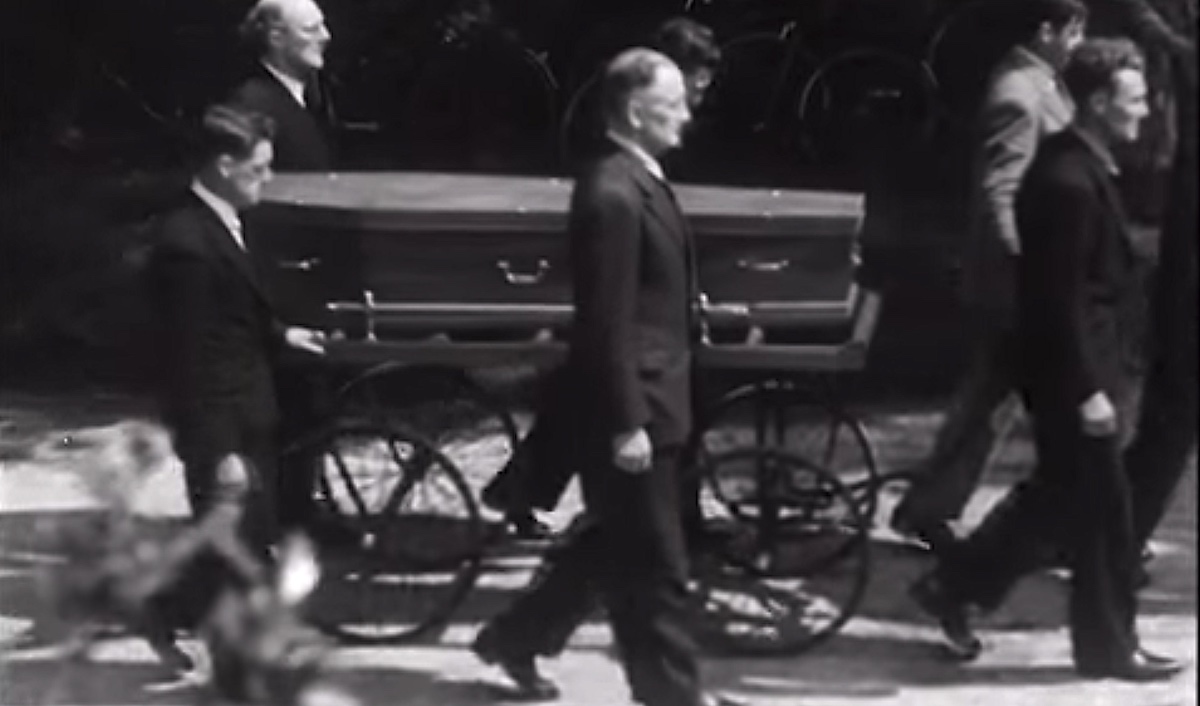
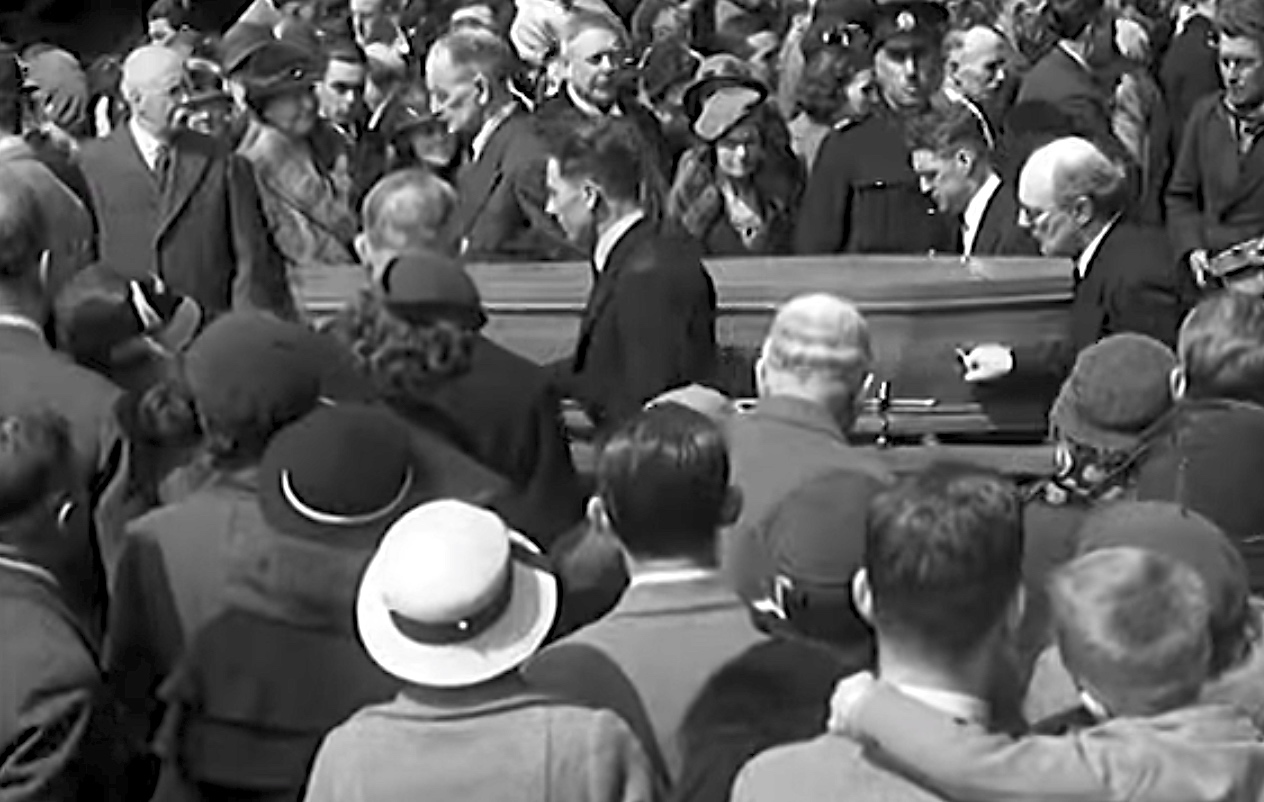
Ronald Storrs, centre foreground, same side behind him, W. Bradbury, in front, Arthur Russell.
Far side of coffin left to right, Stewart Newcombe, Pat Knowles and Eric Kennington.